Meta Title: Cryptocurrency for Beginners: Complete Guide to Digital Assets
Meta Description: Learn cryptocurrency from the basics. Understand Bitcoin, altcoins, blockchain, crypto wallets, exchanges, transactions, security, and essential crypto terminology.
Focus Keyword: Cryptocurrency for Beginners
Secondary Keywords: cryptocurrency basics, what is cryptocurrency, Bitcoin for beginners, blockchain explained, crypto wallet, crypto exchange, digital assets, cryptocurrency guide
Cryptocurrency has become one of the most discussed forms of digital finance in the world. From Bitcoin and Ethereum to thousands of other digital assets, cryptocurrencies have introduced a new way to think about money, ownership, payments, and financial technology.
However, getting started with cryptocurrency can feel confusing. Terms such as blockchain, private keys, wallets, exchanges, tokens, stablecoins, market capitalization, and decentralized finance can make the subject appear much more complicated than it actually is.
The good news is that you do not need to understand every technical detail before learning the fundamentals.
This cryptocurrency for beginners guide explains the most important concepts in simple language. You will learn what cryptocurrency is, how blockchain technology works, what Bitcoin and altcoins are, how crypto wallets and exchanges work, what important terminology means, and what beginners should understand before using digital assets.
Important: Cryptocurrency can be highly volatile and involves financial risks. This article is for educational purposes and is not financial, investment, tax, or legal advice.
What Is Cryptocurrency?
Cryptocurrency is a form of digital asset that uses cryptographic techniques to secure transactions and ownership records.
Unlike traditional currencies that are generally issued and managed through central monetary authorities, many cryptocurrencies operate through decentralized networks of computers. These networks use blockchain technology or similar distributed-ledger systems to record transactions.
Bitcoin is the most well-known example of a cryptocurrency.
One important characteristic of cryptocurrency is that it exists primarily in digital form. You do not normally hold physical Bitcoin coins in your hand. Instead, ownership is represented through cryptographic information associated with a blockchain network.
Cryptocurrencies can be used for different purposes depending on the particular project. Some are designed primarily as digital currencies, while others can support applications, smart contracts, decentralized finance systems, gaming ecosystems, or other blockchain-based services.
Because cryptocurrencies differ significantly from one another, it is important not to assume that every digital asset works in exactly the same way.
How Does Cryptocurrency Work?
At a basic level, cryptocurrency transactions involve several important components:
- A blockchain or distributed ledger
- A network of computers
- Cryptographic keys
- Digital wallets
- Transaction verification
- Consensus mechanisms
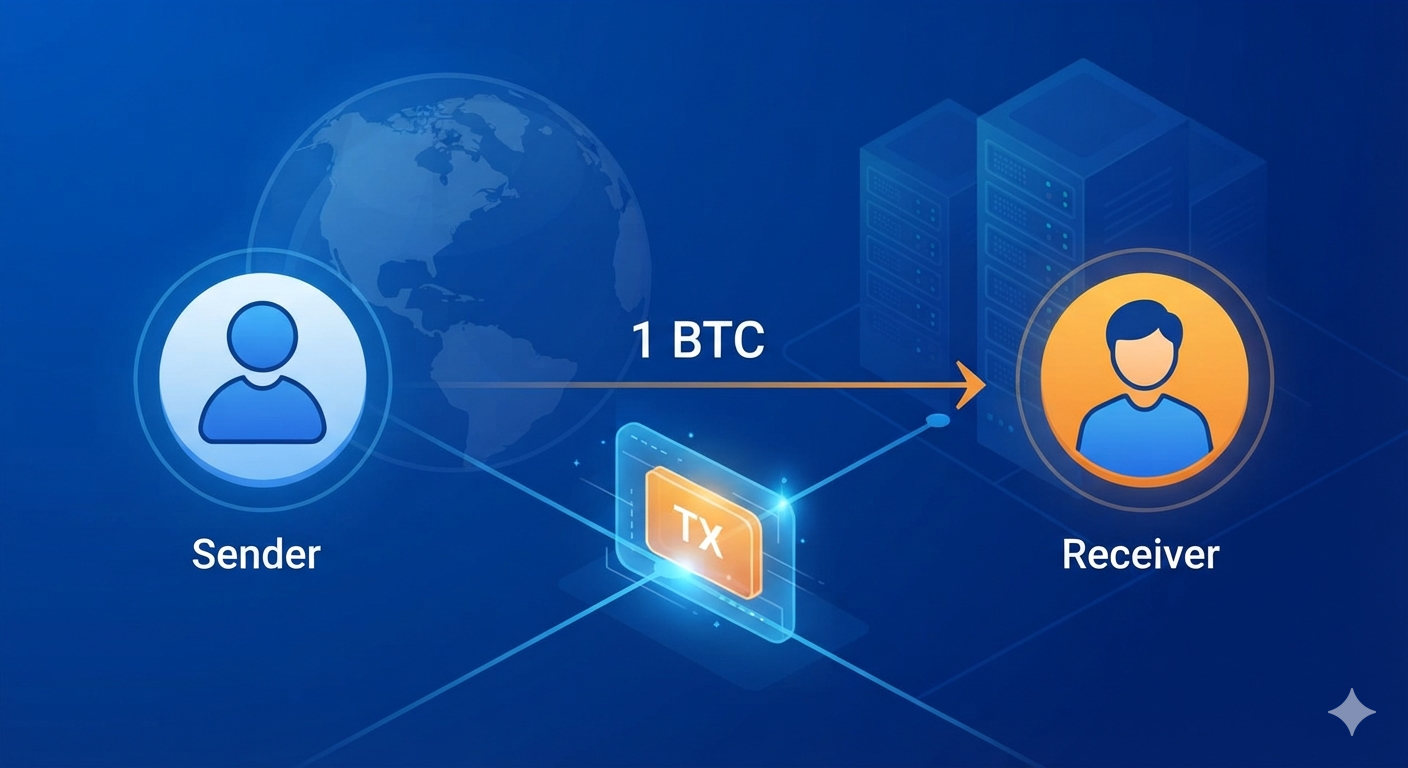
Suppose Alice wants to send cryptocurrency to Bob.
Alice uses her wallet to create a transaction. The transaction contains information such as the destination address and the amount being transferred.
The network receives the transaction and checks whether it follows the rules of the blockchain. Depending on the network’s consensus mechanism, transactions may then be processed and added to the blockchain.
Once the transaction has been sufficiently confirmed, the blockchain records the transfer.
This system allows participants to verify transactions without necessarily relying on a traditional central authority to maintain a single database.
What Is Blockchain Technology?
Blockchain is one of the fundamental technologies behind many cryptocurrencies.
A blockchain can be thought of as a distributed digital ledger. Instead of storing transaction information in one central database controlled by a single organization, copies of the ledger can be maintained across a network of computers.
Transactions are grouped into blocks. These blocks are connected together in chronological order, creating a chain.
This structure helps make blockchain records difficult to alter retroactively because changing historical information can require changes to subsequent records and agreement from the relevant network.
However, not all blockchains are identical.
Different blockchain networks can have different:
- Consensus mechanisms
- Transaction speeds
- Fees
- Governance systems
- Security models
- Programming capabilities
- Decentralization characteristics
Therefore, when learning about cryptocurrency, it is useful to understand blockchain as a broad technology rather than a single system.
What Makes Blockchain Different From a Traditional Database?
A traditional database is often controlled by a particular organization or administrator.
For example, a bank may maintain a centralized database containing account balances and transaction records.
A blockchain can distribute the responsibility for maintaining transaction records across a network.
This can provide several characteristics, including:
- Distributed record keeping
- Transparent transaction history on many public blockchains
- Cryptographic verification
- Programmable transactions on some networks
- Reduced dependence on a single database administrator
Blockchain technology is not automatically better than traditional databases for every situation. Its usefulness depends on the specific problem being solved.
What Is Bitcoin?
Bitcoin is the first widely adopted cryptocurrency and remains the most recognizable digital asset.
It was introduced in 2009 under the name Satoshi Nakamoto, a pseudonym whose real-world identity has not been conclusively established.
Bitcoin was designed as a peer-to-peer electronic payment system that could operate without requiring a central financial intermediary for every transaction.
Bitcoin transactions are recorded on the Bitcoin blockchain.
One of Bitcoin’s defining characteristics is its limited issuance schedule. The protocol is designed around a maximum supply of 21 million bitcoins.
Bitcoin can be divided into smaller units called satoshis.
One bitcoin equals:
100,000,000 satoshis
This divisibility allows users to transact with amounts much smaller than one full bitcoin.
What Are Altcoins?
The term altcoin generally refers to cryptocurrencies other than Bitcoin.
There are thousands of digital assets, and they can have very different purposes.
Some may focus on:
- Smart contracts
- Payments
- Decentralized applications
- Stable-value transactions
- Gaming
- Digital collectibles
- Privacy
- Financial applications
- Blockchain infrastructure
Ethereum is one of the best-known blockchain platforms besides Bitcoin. It supports smart contracts and decentralized applications.
Other networks have different technical designs and goals.
For beginners, the key lesson is simple:
Do not assume that every cryptocurrency is simply another version of Bitcoin.
Each project should be evaluated according to its technology, purpose, development activity, network economics, risks, and use cases.
What Are Digital Assets?
A digital asset is an asset represented in digital form.
Cryptocurrencies are one category of digital assets, but the broader digital-asset ecosystem can include other blockchain-based representations.
Examples may include:
- Cryptocurrencies
- Tokens
- Stablecoins
- Non-fungible tokens
- Tokenized assets
The exact legal and regulatory treatment of digital assets varies between countries and can change over time.
For that reason, users should check the rules that apply in their own jurisdiction before buying, selling, transferring, or using digital assets.
What Is a Crypto Wallet?
A cryptocurrency wallet is a tool used to manage the cryptographic information needed to interact with blockchain assets.
One common misconception is that a crypto wallet literally stores coins like a physical wallet stores cash.
In most blockchain systems, the assets remain recorded on the blockchain. The wallet manages the keys or credentials that allow the user to authorize transactions associated with their addresses.
Crypto wallets can generally be divided into several categories.
Hot Wallets
Hot wallets are connected to the internet.
Examples include:
- Mobile wallets
- Browser wallets
- Desktop wallets
They can be convenient for frequent transactions, but being connected to the internet can expose them to additional security risks.
Cold Wallets
Cold wallets are designed to keep private keys offline or isolated from internet-connected environments.
Hardware wallets are a common example.
Cold storage is often considered useful for people who want to reduce certain online attack risks when holding assets for longer periods.
However, cold storage does not eliminate every risk. Losing a recovery phrase, approving a malicious transaction, or purchasing a compromised device can still create serious problems.
What Is a Public Key?
A public key is cryptographic information that can be used in generating or identifying blockchain addresses and verifying certain cryptographic operations.
In simplified terms, public information can generally be shared more safely than private credentials.
A cryptocurrency address is often derived from cryptographic information associated with a key pair.
Users commonly share their receiving address when someone wants to send them cryptocurrency.
What Is a Private Key?
A private key is highly sensitive cryptographic information used to authorize transactions or control assets associated with it.
The basic rule for beginners is:
Never share your private key with anyone.
Someone who obtains control of your private key may be able to move the associated assets.
This is one of the most important security concepts in cryptocurrency.
Unlike a traditional bank account where a bank may be able to reverse or investigate certain transactions, blockchain transactions can be difficult or impossible to reverse once confirmed.
What Is a Seed Phrase?
A seed phrase, recovery phrase, or backup phrase is a sequence of words used by many cryptocurrency wallets to restore access to wallet accounts.
Depending on the wallet design, the phrase can provide access to the keys controlling multiple blockchain accounts.
This makes it extremely sensitive.
You should generally:
- Keep it offline
- Store it securely
- Never share it
- Avoid entering it into unknown websites
- Avoid photographing it if possible
- Never send it through ordinary messaging apps
A legitimate support representative should not need your recovery phrase to provide ordinary assistance.
If someone asks for your seed phrase, treat the request as a major security warning.
What Is a Cryptocurrency Address?
A cryptocurrency address is a string of letters and numbers used to identify where digital assets can be sent on a particular blockchain network.
Different blockchain networks use different address formats.
Before sending cryptocurrency, users should carefully verify:
- The destination address
- The blockchain network
- The asset being transferred
- Any required memo or tag
- The transaction fee
Sending an asset to an incompatible network or incorrect address can result in permanent loss.
What Is a Cryptocurrency Exchange?
A cryptocurrency exchange is a platform where users can buy, sell, or trade digital assets.
Crypto exchanges can operate in different ways and may offer different services.
Common features include:
- Buying cryptocurrency with traditional currency
- Selling cryptocurrency
- Crypto-to-crypto trading
- Deposits and withdrawals
- Market charts
- Trading orders
- Account security features
Some exchanges are centralized, while decentralized exchanges operate through blockchain-based protocols.
Centralized vs. Decentralized Exchanges
Centralized Exchanges
Centralized exchanges, often called CEXs, are operated by companies or organizations.
Users generally create accounts and may be required to complete identity verification depending on the platform and jurisdiction.
Advantages can include:
- User-friendly interfaces
- Convenient fiat purchases
- Customer support
- Trading tools
- High liquidity on some platforms
However, users must trust the platform to safeguard funds and operate properly.
Decentralized Exchanges
Decentralized exchanges, or DEXs, allow users to trade assets through blockchain-based smart contracts rather than relying on a traditional centralized intermediary for every trade.
Users typically connect a compatible wallet and interact directly with the protocol.
DEXs can provide greater control over assets, but they can also involve more complexity and risks, including smart-contract vulnerabilities, price slippage, malicious tokens, and irreversible transactions.
Beginners should understand how a platform works before using it.
What Is a Cryptocurrency Transaction?
A cryptocurrency transaction is a transfer of digital assets from one blockchain address to another.
For example, if you send Bitcoin to another person’s Bitcoin address, the transaction is broadcast to the Bitcoin network.
The network verifies the transaction according to its rules.
After processing and confirmation, the transaction becomes part of the blockchain’s recorded history.
A transaction normally contains information such as:
- Sender-related information
- Destination address
- Amount
- Transaction fee
- Cryptographic authorization
The exact technical structure varies between blockchains.
What Are Crypto Transaction Fees?
Blockchain networks typically charge fees for processing transactions.
These fees compensate or incentivize network participants responsible for processing transactions, depending on the blockchain’s design.
Fees can vary significantly.
Factors affecting fees can include:
- Network demand
- Transaction size
- Blockchain architecture
- Available network capacity
- Fee market conditions
A beginner should always check the network and expected fee before confirming a transaction.
What Is Cryptocurrency Mining?
Mining is a process used by certain blockchain networks, most notably Bitcoin, to process transactions and help secure the network through a proof-of-work consensus mechanism.
Bitcoin miners use specialized computing equipment to compete in solving computational problems.
Successful miners may receive rewards according to the network’s rules.
Mining requires significant resources, including:
- Specialized hardware
- Electricity
- Cooling
- Technical knowledge
- Infrastructure
Not every cryptocurrency uses mining.
Some blockchain networks use different consensus mechanisms, such as proof of stake.
What Is Proof of Work?
Proof of Work, commonly abbreviated as PoW, is a consensus mechanism that requires participants to perform computational work.
Bitcoin uses Proof of Work.
Mining participants compete to find a valid solution to a cryptographic puzzle.
The process makes it expensive to manipulate the network’s transaction history because an attacker would generally need substantial computational resources.
Proof of Work has also generated discussions about energy consumption and environmental impact.
What Is Proof of Stake?
Proof of Stake, or PoS, is another consensus approach.
Instead of relying primarily on computational mining competition, proof-of-stake networks use validators who typically lock or “stake” cryptocurrency according to the network’s rules.
Validators participate in transaction processing and network consensus.
Different proof-of-stake networks have different rules concerning:
- Validator requirements
- Staking rewards
- Penalties
- Delegation
- Network governance
Proof of Stake can operate differently from Proof of Work and should not be treated as simply a cheaper version of mining.
What Are Stablecoins?
Stablecoins are digital assets designed to maintain a relatively stable value compared with a reference asset or mechanism.
Many stablecoins attempt to maintain a value close to a fiat currency such as the U.S. dollar.
Stablecoins can be used for:
- Trading
- Transfers
- Payments
- DeFi applications
- Moving value between platforms
However, “stable” does not mean “risk-free.”
Stablecoins can face risks involving reserves, collateral, liquidity, smart contracts, governance, regulation, or market conditions.
Users should understand how a particular stablecoin attempts to maintain its value before using it.
What Is Market Capitalization in Crypto?
Market capitalization, often called market cap, is commonly calculated as:
Market Cap = Current Price × Circulating Supply
For example, if a hypothetical cryptocurrency has:
- Price: $10
- Circulating supply: 10 million coins
Its approximate market capitalization would be:
$100 million
Market capitalization is useful for comparing the size of different assets, but it should not be interpreted as the amount of money invested in a cryptocurrency.
A change in price can change market capitalization without an equivalent amount of new money entering or leaving the market.
What Is Crypto Volatility?
Volatility refers to how significantly an asset’s price changes over time.
Cryptocurrency markets can experience substantial price movements.
Prices can be affected by:
- Market sentiment
- News
- Regulation
- Technology developments
- Supply and demand
- Macroeconomic conditions
- Liquidity
- Speculation
Because of this volatility, beginners should avoid assuming that previous price performance guarantees future results.
What Is Liquidity?
Liquidity refers broadly to how easily an asset can be bought or sold without causing a significant change in its price.
Highly liquid markets generally have many buyers and sellers.
Lower-liquidity cryptocurrencies can experience:
- Larger spreads
- Greater price slippage
- Difficulty executing large orders
- Greater price fluctuations
Liquidity is therefore an important concept when evaluating a crypto market.
What Is a Token?
A token is a digital asset created on an existing blockchain or network.
For example, a blockchain platform can support the creation of multiple tokens.
Tokens can have different functions.
They may represent:
- Utility
- Governance rights
- Access to applications
- Digital collectibles
- Stable-value assets
- Other forms of blockchain-based value
The word “token” does not automatically tell you whether an asset is safe, valuable, or legitimate.
What Are Smart Contracts?
Smart contracts are programs deployed on blockchain networks that can automatically execute predefined actions when specified conditions are met.
For example, a smart contract might allow users to exchange one digital asset for another according to programmed rules.
Smart contracts can support:
- Decentralized exchanges
- Lending protocols
- NFT marketplaces
- Games
- Financial applications
- Governance systems
However, smart contracts are software and can contain vulnerabilities.
A coding error or security flaw can potentially cause financial losses.
What Is DeFi?
DeFi stands for Decentralized Finance.
It refers to blockchain-based financial applications that aim to provide services such as trading, lending, borrowing, and asset management through decentralized protocols.
DeFi applications can reduce reliance on traditional intermediaries in certain activities.
However, DeFi involves substantial technical and financial risks.
Potential risks include:
- Smart-contract vulnerabilities
- Oracle failures
- Liquidity problems
- Exploits
- Fraudulent projects
- Market volatility
- User-interface attacks
Beginners should research a protocol carefully before interacting with it.
What Are NFTs?
NFT stands for Non-Fungible Token.
Unlike interchangeable units such as many cryptocurrencies, an NFT is designed to represent a unique or individually identifiable digital asset or ownership record.
NFTs have been used for:
- Digital artwork
- Collectibles
- Gaming items
- Memberships
- Event-related assets
- Digital certificates
The value of an NFT can be highly subjective and market-dependent.
Owning an NFT also does not automatically mean owning the underlying copyright or intellectual-property rights.
Those rights depend on the specific terms associated with the asset.
Essential Cryptocurrency Terms Beginners Should Know
Learning basic terminology can make crypto discussions much easier.
Blockchain
A distributed ledger used by many cryptocurrency networks to record transactions.
Bitcoin
The first widely adopted cryptocurrency, launched in 2009.
Altcoin
A general term commonly used for cryptocurrencies other than Bitcoin.
Wallet
A tool for managing cryptographic keys and interacting with blockchain assets.
Private Key
Sensitive cryptographic information used to authorize certain transactions.
Seed Phrase
A recovery phrase used by many wallets to restore access.
Address
A destination identifier used to receive blockchain assets.
Token
A digital asset created on or associated with a blockchain.
Stablecoin
A cryptocurrency designed to maintain relatively stable value against a reference asset.
Exchange
A platform or protocol where digital assets can be traded.
Gas Fee
A term commonly used for transaction fees on certain blockchain networks.
Mining
A Proof-of-Work process used by networks such as Bitcoin to secure and process transactions.
Staking
Participating in a Proof-of-Stake network by committing assets according to its rules.
Liquidity
The ability to buy or sell an asset with relatively limited price impact.
Market Cap
Price multiplied by circulating supply.
Smart Contract
Blockchain-based software that executes programmed rules.
DeFi
Decentralized financial applications built using blockchain technology.
NFT
A non-fungible digital token representing a unique blockchain-based asset or record.
How Beginners Can Start Learning Cryptocurrency
You do not need to buy cryptocurrency immediately to learn about it.
A better starting point is education.
Step 1: Learn the Fundamentals
Understand:
- Bitcoin
- Blockchain
- Wallets
- Private keys
- Exchanges
- Transactions
- Fees
- Market capitalization
Step 2: Research Individual Projects
Before considering a cryptocurrency, investigate:
- What problem does it solve?
- Who developed it?
- How does its blockchain work?
- What is its token supply?
- Is the project actively developed?
- What risks are associated with it?
- Where is the project available?
- What are the relevant legal considerations?
Step 3: Learn Wallet Security
Understand how:
- Seed phrases work
- Private keys work
- Addresses work
- Network selection works
- Transaction confirmation works
Step 4: Start With Small Amounts If You Decide to Use Crypto
If you eventually decide to buy cryptocurrency, avoid using money you cannot afford to lose.
Cryptocurrency prices can change quickly, and losses can be substantial.
Step 5: Keep Learning
The cryptocurrency industry changes rapidly.
New protocols, technologies, regulations, security threats, and market structures can emerge over time.
Common Cryptocurrency Scams
Crypto users can encounter many types of scams.
Some common examples include:
Fake Investment Platforms
Scammers may create websites that display fake profits and request additional deposits.
Phishing
Attackers may send messages that imitate exchanges, wallets, or other services and attempt to steal login credentials or private information.
Fake Giveaways
A scammer may promise to send cryptocurrency if users first send a smaller amount.
Legitimate giveaways should always be independently verified.
Fake Support Accounts
Scammers sometimes impersonate customer-support representatives.
They may ask for:
- Passwords
- Recovery phrases
- Private keys
- Remote access
- Cryptocurrency payments
Never provide sensitive wallet credentials to someone simply because they claim to be support.
Pump-and-Dump Schemes
In some schemes, promoters attempt to create artificial excitement around an asset and encourage others to buy before selling their own holdings.
Extreme caution is appropriate when someone promises guaranteed or unusually high returns.
Cryptocurrency Security Tips
Security should be one of the first things a beginner learns.
Use Strong Account Security
Use unique passwords and enable multi-factor authentication where available.
Protect Your Recovery Phrase
Never share your seed phrase.
Verify Addresses
Cryptocurrency addresses can be difficult to read. Check the destination carefully before sending.
Check the Network
Make sure the sending and receiving networks are compatible.
Avoid Suspicious Links
Do not connect your wallet to unknown websites simply because someone sends you a link.
Beware of Urgency
Messages claiming that you must act immediately to protect your funds are common in phishing attacks.
Research Before Signing
When using a wallet with decentralized applications, understand what transaction or permission you are approving.
Keep Software Updated
Use official software sources and keep relevant wallet or security software updated.
Is Cryptocurrency Legal?
The legal status of cryptocurrency varies by country and can change over time.
Some jurisdictions permit cryptocurrency activities under specific regulatory frameworks, while others impose restrictions or prohibitions on particular activities.
Tax treatment can also differ.
Before buying, selling, transferring, mining, staking, or operating a cryptocurrency-related business, check the current laws and regulations applicable to your jurisdiction.
Do not rely solely on information written years ago because cryptocurrency regulation is an evolving area.
Cryptocurrency and Taxes
Crypto-related tax treatment varies significantly by jurisdiction.
Depending on local rules, activities that may have tax implications can include:
- Selling cryptocurrency
- Exchanging one cryptocurrency for another
- Receiving crypto as income
- Mining
- Staking
- Certain token transactions
Keeping accurate records can be useful.
Consider maintaining information such as:
- Date of transaction
- Asset
- Quantity
- Purchase price
- Sale price
- Fees
- Wallet address
- Exchange
- Transaction ID
For specific tax questions, consult the relevant tax authority or a qualified tax professional in your jurisdiction.
Advantages and Risks of Cryptocurrency
Cryptocurrency technology offers several potential characteristics that attract users and developers.
Potential benefits can include:
- Global digital transfers
- Programmable transactions
- Blockchain transparency
- Alternative financial infrastructure
- Digital ownership systems
- Access to decentralized applications
However, significant risks also exist.
These can include:
- High price volatility
- Cybersecurity threats
- Loss of private keys
- Scams and fraud
- Smart-contract vulnerabilities
- Regulatory uncertainty
- Liquidity risks
- Transaction errors
Understanding both sides is essential for anyone learning about digital assets.
Cryptocurrency vs. Traditional Money
Traditional money is generally issued within a government-backed monetary and financial system.
Banks and payment companies commonly provide services such as:
- Deposits
- Transfers
- Payments
- Loans
- Account management
Cryptocurrencies use blockchain networks or related technologies to provide different models of digital ownership and transaction processing.
The two systems can coexist, and cryptocurrency does not necessarily replace every traditional financial service.
In fact, many people use both traditional financial services and digital assets for different purposes.
Frequently Asked Questions About Cryptocurrency
Is cryptocurrency real money?
Cryptocurrency is a digital asset, but whether it is legally considered money or currency depends on the jurisdiction and the specific asset.
Is Bitcoin the same as cryptocurrency?
Bitcoin is a cryptocurrency. Cryptocurrency is the broader category.
Can I buy less than one Bitcoin?
Yes. Bitcoin is divisible into smaller units called satoshis.
Do I need a wallet to own cryptocurrency?
It depends on how you hold the asset. If you use a custodial exchange, the platform may control the underlying keys. With a self-custody wallet, you control the relevant keys.
Can cryptocurrency transactions be reversed?
Many blockchain transactions are difficult or impossible to reverse after confirmation. This is why users should verify transaction details before submitting them.
What happens if I lose my seed phrase?
If you lose the recovery information and have no alternative backup, you may permanently lose access to assets controlled by that wallet.
Is cryptocurrency safe?
Cryptocurrency involves various risks. Security depends on factors such as the asset, platform, wallet, user behavior, and broader market conditions.
Can cryptocurrency make me rich?
There is no guaranteed way to make money from cryptocurrency. Prices can rise or fall substantially, and some assets may lose most or all of their value.
Final Thoughts
Cryptocurrency can initially seem complicated, but understanding the fundamentals makes the subject much easier to navigate.
The most important concepts for beginners are Bitcoin, blockchain, wallets, private keys, exchanges, transactions, tokens, stablecoins, smart contracts, market capitalization, and security.
The biggest lesson is that cryptocurrency is not simply about buying coins and watching prices. It is a broader technological ecosystem involving cryptography, distributed networks, digital ownership, software, financial markets, and evolving regulation.
Before using any cryptocurrency service, take time to understand how it works, what risks are involved, and what rules apply in your jurisdiction.
Most importantly, protect your private keys and recovery phrases, verify transactions carefully, and be skeptical of anyone promising guaranteed profits.
A strong foundation in cryptocurrency basics can help beginners make more informed decisions as they explore the rapidly changing world of digital assets.
Quick Cryptocurrency Glossary
Bitcoin: The first widely adopted cryptocurrency.
Blockchain: A distributed ledger used to record transactions.
Cryptocurrency: A digital asset using cryptographic technology.
Wallet: A tool used to manage blockchain keys and interact with assets.
Private Key: Sensitive information used to authorize transactions.
Seed Phrase: A recovery phrase used to restore a compatible wallet.
Exchange: A platform or protocol for trading digital assets.
Altcoin: A cryptocurrency other than Bitcoin.
Token: A blockchain-based digital asset.
Stablecoin: A digital asset designed to maintain relatively stable value.
Mining: A Proof-of-Work process used by some blockchains.
Staking: Participation in certain Proof-of-Stake networks.
Smart Contract: Blockchain-based software that executes programmed rules.
DeFi: Decentralized financial applications.
NFT: A non-fungible blockchain-based token.
Market Cap: Asset price multiplied by circulating supply.
Liquidity: How easily an asset can be traded without substantial price impact.
Volatility: The degree to which an asset’s price changes over time.